


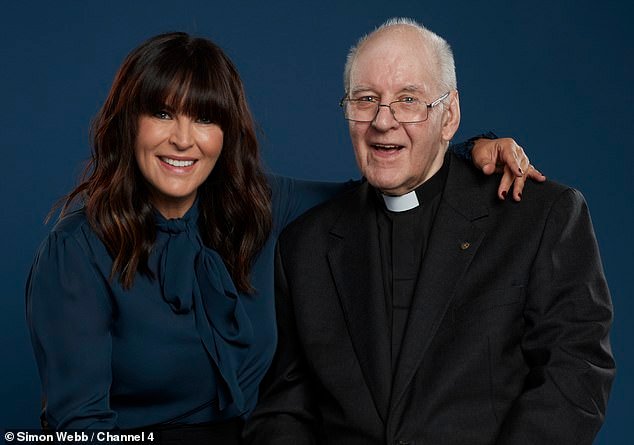
The “Long Grief”: Anna Richardson’s Raw Account of the Dementia Care Crisis
Reverend James Richardson built his life around his community and the Church. Today, the walls of his Staffordshire care home are lined with touchpoints of his identity—photos of his wedding, receiving his OBE, and meeting both the Queen and the Pope.
He needs these visual anchors because vascular dementia is slowly taking his memories away. For his daughter, TV presenter Anna Richardson, navigating his decline has exposed the devastating emotional toll of the disease, as well as the shocking inadequacies of the UK’s social care system.

The Agony of the Care Home Decision
Moving a fiercely independent parent into full-time care is a heartbreaking decision that thousands of families face every year. For the Richardsons, the turning point came when assisted living was no longer safe; Reverend James was suffering frequent falls and was once found wandering outside in his underwear.
“Dad didn’t want to go into a home. He wanted his independence. He fought tooth and nail for it,” Anna shares. “But he needed 24-hour care, so we had no choice.”
While they found a home close to his beloved church, the battle didn’t end there. When the local authority attempted to move him to a cheaper facility 50 miles away, a social worker dismissively told Anna: “Well, he’s got dementia. He doesn’t know where he is so it doesn’t matter.”
“I was enraged by that,” Anna recalls, having filed a formal complaint. “Imagine telling a family that it doesn’t matter what happens to their loved one, because they won’t remember it anyway. It says everything about how people like my dad are thrown on the scrapheap when they get old.”
A Systemic Failure: Less Training Than a Barista
Anna’s frustrating experience aligns with a damning new report from the Alzheimer’s Society, the Centre for Dementia Research, and IFF Research. The findings reveal a severe crisis in care home qualifications:
-
Lack of Training: Nearly half of all care home workers have not received specific dementia training, despite 70% of residents living with the condition.
-
Inadequate Courses: Half of all dementia training courses last just one to two hours—meaning many care workers receive less training than a coffee shop barista.
As an ambassador for the Alzheimer’s Society, Anna has witnessed this lack of education firsthand. She describes seeing patients lined up in front of inappropriate TV screens all day with zero stimulation, and staff lacking the basic knowledge of how to feed or speak to dementia patients.
“If you have dementia, you need brightly coloured food because your appetite changes, as does your ability to distinguish food on the plate,” she explains. She also recalls having to reprimand staff for saying her father was “away with the fairies”—a deeply inappropriate comment that violates the basics of dementia care and dignity.

The Caregiver’s Breaking Point
Vascular dementia is caused by reduced blood flow to the brain, which slowly kills off tissue. There is no cure. As the disease progresses, the burden of care falls heavily on the family.
Despite having a background as a hypnotherapist with a “toolkit” for life stresses, Anna admits the situation has pushed her to the brink, impacting her relationships, finances, and mental health.
“To be honest, I find it catastrophic and endless,” she confesses, noting she has had to rely on a low dose of antidepressants to manage the anxiety. “I will have phone calls from Dad most days because he needs something… It’s exhausting.”
With 1 in 3 people projected to develop dementia, Anna is raising the alarm for a society that is vastly underprepared—especially for the growing demographic of aging adults who do not have children to shoulder the caregiving burden.
Ultimately, witnessing a vibrant parent regress is an agonizing process. “It’s a long grief,” Anna says. “You are witnessing someone becoming a child again, and it’s awful.”
📋 Track the Early Signs: Interactive Dementia Checklist
If you are navigating the early stages of cognitive decline with a loved one, keeping a written record of their symptoms is crucial for getting an accurate diagnosis and the right care plan from your GP.
Use the interactive checklist below to log specific changes in memory, communication, and daily behavior.
