

The Hidden Carcinogens in Your Fridge: Are Smoked Foods Increasing Your Cancer Risk?
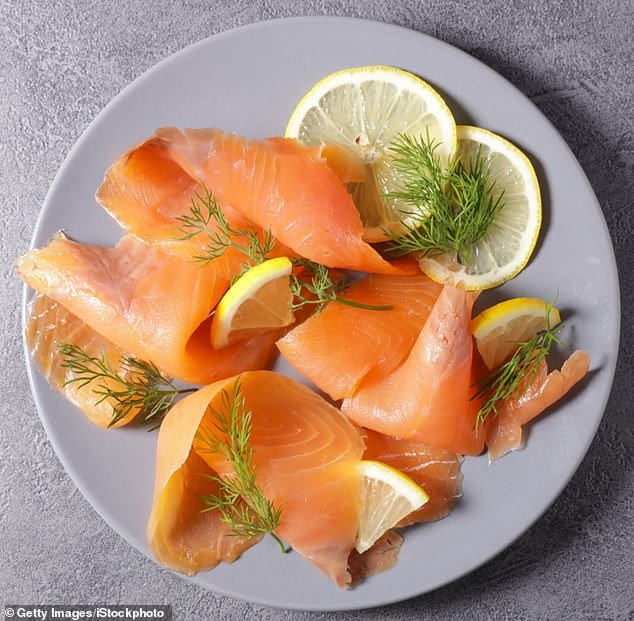
Smoked salmon was once a luxury reserved exclusively for holidays and special occasions. Today, it has become a staple of the modern diet, readily available in everyday supermarket sandwiches and breakfast bagels.
However, food scientists and dietitians are issuing a new warning: consuming too many foods treated with the traditional smoking process—including salmon, bacon, cheeses, and even smoky-flavored crisps—could significantly increase your risk of developing certain types of cancer.

Experts warn that consuming the chemicals created during the food smoking process could increase the risk of certain types of cancer – including for smoked salmon

The Science of Smoke: What Are PAHs?
The danger does not lie in the food itself, but in the chemical reaction created during the smoking process.
Smoking food involves hanging it above smoldering wood in low-oxygen conditions. As the wood burns, it produces chemical compounds that settle heavily onto the food. The primary concern is a group of chemicals known as Polycyclic Aromatic Hydrocarbons (PAHs), which are well-documented carcinogens.
“These compounds can be harmful to the body when ingested at high concentrations,” explains Dr. Idolo Ifie, a lecturer in food processing and food chemistry at the University of Leeds. “Studies have linked the consumption of foods with high levels of PAHs to an increased risk of developing cancer, such as breast, prostate, and colorectal cancer.”
A 2024 study published in the scientific journal Discover Food revealed that samples of smoked meat and fish contained significantly higher concentrations of PAHs than the exact same meats when grilled. The scientists concluded that the PAH levels in the smoked foods frequently exceeded EU safety recommendations.

Why Are PAH Levels Rising?
Traditionally, smoking was used purely to preserve food. Today, it is primarily used as a flavoring agent.
Jane Parker, a professor of flavor chemistry at the University of Reading, notes that smoking food specifically for flavor often requires much higher temperatures. While this creates a stronger, more robust taste, Dr. Ifie warns that the increased heat also generates a significantly higher volume of harmful PAH compounds.
Factors That Increase PAH Levels in Your Food:
-
Fat Content: Fattier foods create more PAHs because dripping fat creates extra smoke, and smoke particles cling easily to fat. Therefore, smoked bacon or fatty meats are generally riskier than lean smoked fish.
-
Temperature: High-temperature smoking produces more PAHs than “mild” or cold-smoking.
-
Wood Type: Research from the University of Bucharest found that plum, alder, and birch wood produced the highest amount of PAHs, while applewood created the least.

Are “Liquid Smoke” Flavorings Safer?
At one point, food manufacturers hoped that synthetic smoke flavorings—commonly used in smoky bacon crisps, BBQ sauces, and processed cheeses—would provide a safer alternative to traditional wood smoking.
Unfortunately, they are not risk-free. In 2024, the EU announced a complete 180-degree turnaround, moving to ban several synthetic smoke flavorings.
“Whether you use smoke flavorings or the traditional smoking method, you will be exposed to carcinogens,” warns Professor Parker. “Smoke flavorings incorporate liquid smoke; it can be purified to a certain extent, but it still has a component of smoke in it, so you can’t remove the carcinogens entirely.”
How Much Smoked Food is Safe to Eat?
While the presence of carcinogens sounds alarming, experts emphasize that the danger lies in the dose. You do not need to banish smoked salmon from your diet entirely.
In fact, the human body naturally carries specific enzymes designed to break down PAHs and process them as waste. However, consuming smoked foods constantly can overwhelm the immune system and create a dangerous build-up of harmful compounds over time.
Expert Guidelines for Safe Consumption:
-
The “Once a Week” Rule: Dr. Ifie recommends limiting smoked foods—particularly meats—to roughly once a week to prevent a harmful build-up of PAHs.
-
Opt for “Mild”: Look for “mild” strength smoked salmon at the supermarket. A mild rating indicates less heat and less smoke were used during preparation, meaning lower PAH levels.
-
Choose Alternative Cooking Methods: Clare Thornton-Wood, a spokesperson for the British Dietetic Association, reminds consumers that oily fish (like salmon and mackerel) are vital sources of brain-boosting Omega-3s. To get the benefits without the risks, try eating your fish grilled, poached, or tinned instead of smoked.
-
Watch the Salt: Remember that smoked foods are also heavily cured in salt, which can raise blood pressure and increase the risk of heart attacks and strokes.
“I think it’s useful to think about what’s in your food,” Thornton-Wood advises. “If you’re eating a lot of smoked products, it’s worth considering cutting down—but you don’t need to stop eating them entirely.”
