


🚢 The MV Hondius Crisis: A Rare “Mixing Vessel” Event
Hazmat teams and medical evacuations have returned to the high seas following an outbreak of hantavirus aboard the luxury cruise liner MV Hondius. As of early May 2026, the outbreak has claimed three lives and sickened at least seven others, prompting emergency airlifts to Europe and South Africa.
But how does a virus typically spread by rats take over a luxury ship? The answer lies in the specific strain involved.
🦠 The “Andes” Exception: Human-to-Human Transmission
Typically, humans contract hantavirus by breathing in aerosolized particles from the droppings, urine, or saliva of infected rodents. However, officials believe the MV Hondius outbreak involves the Andes strain—the only known hantavirus capable of spreading directly from person to person.
How it Spreads on a Ship:
-
The Pre-Symptomatic Window: According to Dr. Zaid Fadul, the virus can begin actively shedding up to two weeks before a person feels any symptoms.
-
Close Contact: The virus replicates in the lungs and salivary glands, meaning it can spread through respiratory droplets and saliva.
-
The Cruise Environment: Crowded, enclosed spaces, shared buffets, and touching contaminated surfaces before touching the face create an ideal environment for a virus that usually struggles to jump between humans.
Origin Theory: Argentine officials suspect the index case may be a Dutch couple who visited a landfill site in Ushuaia to photograph birds, exposing themselves to local infected rodents before boarding the ship.

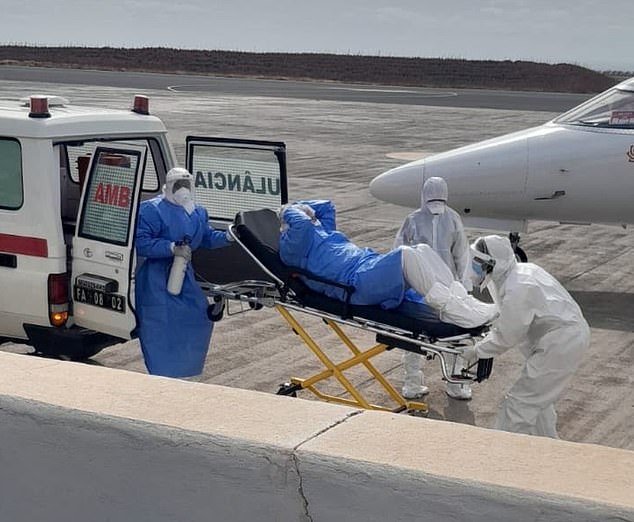
Health workers are seen evacuating a patient from luxury cruise liner MV Hondius, which is the center of a hantavirus outbreak
⚠️ The Medical Reality: A 40% Mortality Rate
Hantavirus is incredibly dangerous because it can progress rapidly to Hantavirus Pulmonary Syndrome (HPS). This severe condition causes blood vessels in the lungs to leak, filling the air sacs with fluid and leading to acute respiratory failure. The disease carries a staggering 40% mortality rate.
🩺 Recognizing the Symptoms
Because the early stages of hantavirus mimic common seasonal illnesses, it is notoriously difficult to diagnose until it is too late.
| The “Prodromal” (Early) Phase | The Severe Phase (HPS) |
| Fever over 101°F (38.3°C) | Sudden, severe shortness of breath |
| Severe muscle aches (especially thighs, hips, back) | Fluid buildup in the lungs |
| Headaches & Fatigue | Coughing and chest tightness |
| Abdominal pain, nausea, or vomiting | Rapid progression to respiratory failure |
Dr. Fadul’s Urgent Advice: “Andes virus can progress from flu-like symptoms to life-threatening respiratory failure in as little as 24 hours. Early ICU support saves lives. Sleeping it off does not.” If you suspect exposure, take a rapid Covid/Flu test. If negative, go to the ER and explicitly state: “I have possible hantavirus exposure.”

An ambulance boat carrying crew members wearing hazmat suits, returns to the port of Praia, the capital of Cape Verde, on May 5, 2026 after a visit to the cruise ship MV Hondius
🌎 Is There a Broader Threat to the US or Global Public?
While the situation is terrifying for those aboard the MV Hondius, infectious disease experts emphasize that the broader threat to the public is very low.
-
Geographic Isolation: The Andes strain is primarily endemic to South America (Argentina and Chile). Dr. Maximo Brito anticipates this is an isolated spillover event, not the start of a global cruise ship trend.
-
Strict Containment: Epidemiologists like Dr. Syra Madad note that while ships are “mixing vessels,” modern maritime medical protocols are built for rapid isolation.
-
Repatriation Protocols: It is highly unlikely that exposed passengers (including the 17 Americans onboard) will be allowed to disembark or return home without undergoing rigorous testing and, if necessary, strict medical isolation.
