


The Silent Shift: Researchers Warn of Airborne H5N1 Risk on Dairy Farms
For years, the medical community’s understanding of H5N1 (Bird Flu) was relatively straightforward: the virus primarily spread through direct contact with the saliva, mucus, or feces of infected poultry and cattle. However, a groundbreaking new study has upended this assumption, revealing that the virus can be detected in the air, significantly increasing the risk of widespread outbreaks and human infection.
Researchers studying active outbreaks on California dairy farms have discovered that H5N1 is no longer confined to surfaces or unpasteurized milk. Instead, it has found a way to go airborne—specifically within the high-intensity environment of milking parlors.
The “Aerosolization” Trap: How Milk Becomes a Vehicle
The study, recently published in PLOS Biology, identifies the milking process as a primary culprit for viral spread. In the enclosed, humid environment of a dairy parlor, the mechanical process of milking cows appears to release fine droplets of milk into the air.
-
The Findings: During the second phase of the experiment, researchers collected 35 air samples from milking rooms. A staggering 21 samples (60%) came back positive for H5N1.
-
Live Virus Detection: Most alarmingly, in four of those samples, the virus was still “alive” and infectious, meaning a worker could theoretically contract bird flu simply by breathing while on the job.
-
Wastewater Connection: The team also identified live H5N1 in wastewater samples, suggesting that environmental contamination is far more extensive than previously realized.
Compared to open-air housing pens, the enclosed milking parlor is now considered the single greatest inhalation threat to farm workers.

The Invisible Threat: Asymptomatic Cows and Testing Gaps
One of the most troubling revelations from the California research involves the cows themselves. Traditionally, farmers look for “mastitis”—an inflammation of the udder—as the primary warning sign of H5N1 in cattle. However, this study found that the virus is far more stealthy.
Researchers discovered that cows that appeared perfectly healthy and showed no drop in milk production still carried H5N1 antibodies, indicating a prior infection that went entirely undetected. On one farm, seven cows tested positive for the virus in their milk despite showing zero symptoms of illness.
This suggests that H5N1 may be circulating through herds “under the radar,” moving from animal to animal—and potentially to humans—without triggering traditional alarms.

The Human Toll: 71 Cases and Counting
As of early 2026, 71 Americans have been confirmed to have contracted bird flu since 2024. While the majority are farm workers with direct animal exposure, the mortality rate and the method of spread are causing concern.
-
Fatalities: Two deaths have been recorded, including a patient over 65 with underlying conditions who died in January 2025 after suffering severe respiratory symptoms.
-
The Missouri Mystery: Public health officials are still investigating a patient in Missouri who became the first person to be infected without any known contact with infected birds or cattle. The discovery of airborne transmission in milking parlors may provide the missing link in understanding how “random” infections occur.
Recognizing the Symptoms: From Red Eyes to Organ Failure
According to the CDC, human symptoms of H5N1 often begin like a common cold but can escalate rapidly.
Early Warning Signs:
-
Conjunctivitis: Eye redness, itching, or irritation.
-
Respiratory Issues: Cough, sore throat, and runny or stuffy nose.
-
General Malaise: Fever, body aches, headaches, and extreme fatigue.
Severe Complications: In rare cases, the virus can trigger pneumonia, respiratory failure, kidney injury, and sepsis. It has also been linked to meningoencephalitis (inflammation of the brain), making early detection and treatment vital.
A Call for Extensive Testing and Protection
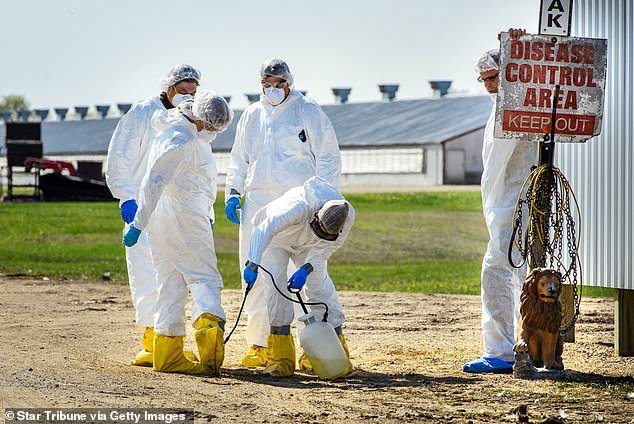
The researchers are clear: the current “wait and see” approach to farm testing is insufficient. Because the virus can survive in wastewater and aerosolized milk droplets, farms require more rigorous environmental monitoring and better protective gear for workers.
“These results highlight the extensive environmental contamination of H5N1 on affected dairy farms,” the study authors noted. To prevent a larger-scale human epidemic, the focus must shift from merely treating sick animals to cleaning the very air that farm workers breathe.
Do you think the discovery of airborne spread should lead to mandatory PPE (like N95 masks) for all dairy farm workers, or is the risk still too localized to justify such a move?
