


“It Wasn’t Bad Enough to Worry About”: A 20-Year-Old’s Wake-Up Call with Testicular Cancer
For Lewis Gould, life as a second-year student at the University of Hull was a typical balancing act of lectures, exam revision, and playing rugby. When he first noticed a dull ache in his left testicle, it didn’t seem like a priority. It wasn’t sharp, it wasn’t constant, and it didn’t interfere with his daily life.
“I just thought it would go away,” says Lewis, now 21. “It wasn’t bad enough to worry about.”
Throughout December 2024, as the term wrapped up and Christmas approached, the discomfort lingered in the background while he focused on training and social events. It wasn’t until his girlfriend intervened that he finally took action.
“She handed me my phone and told me to call the GP. That was the only reason I did anything about it,” he admits.

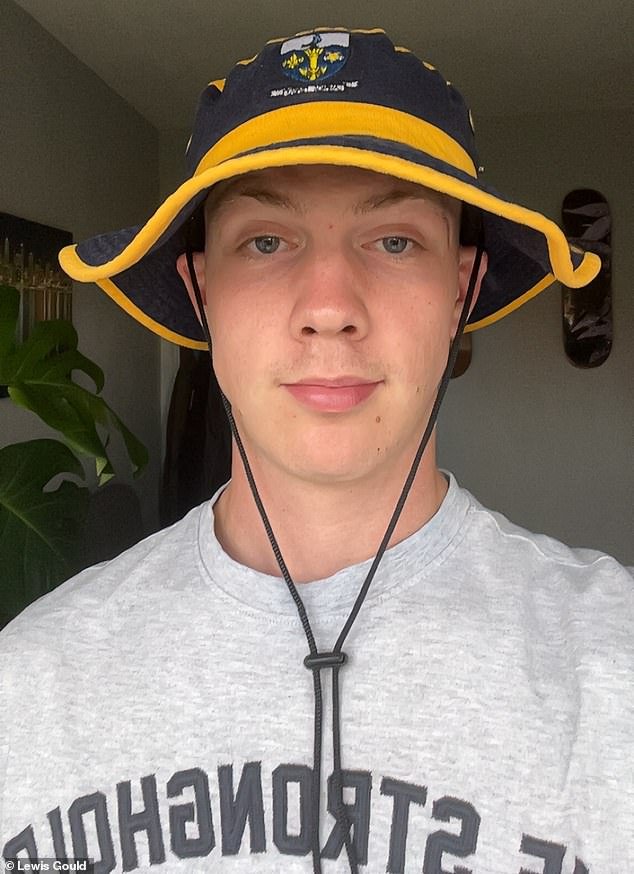
Lewis Gould, now 21, was in his second year at university when he first noticed a dull ache in his left testicle

The Turning Point: From a Dull Ache to a Cancer Diagnosis
At the GP appointment, the situation escalated rapidly.
“The doctor examined me and said he could feel a lump. I was taken aback. I’d never checked myself before and didn’t even know it was there,” Lewis recalls.
Following an urgent ultrasound, he found himself in an oncology clinic the very next day. At just 20 years old, he heard the word “cancer” applied to him for the first time. Because of the lump’s position, doctors explained that a standard biopsy wasn’t possible; the only way to confirm the diagnosis and treat the mass was an orchiectomy—the surgical removal of the testicle.
“That’s when the penny dropped,” Lewis says. “A lot of thoughts were rushing through my head. I was asking lots of questions, like ‘can I still have kids?’, ‘is it still going to work down there?’, ‘What’s it going to look like?'”
Surgery and Recovery
With no other viable options, surgery was booked for that same week. Lewis credits his mother, who traveled from Northampton to Hull to be by his side on December 19, 2024, as a crucial source of support during the hardest part of the ordeal.
Despite his understandable nerves regarding pain and recovery time, the procedure took just half an hour. Lewis was fitted with a testicular prosthesis (a silicone or saline-filled implant designed to mimic the natural size and feel of a testicle) and was back home watching TV the same evening.
While the short-term recovery required a frustrating pause on rugby and the gym, the long-term news was worth celebrating. During his follow-up oncology appointment, Lewis was officially diagnosed with stage 1 seminoma—the earliest form of testicular cancer. Because it was caught early, the disease had not spread to his lymph nodes or other organs, meaning no further chemotherapy or radiation was required.

Becoming an Advocate: The Message to Young Men
Today, Lewis’s life is largely back to normal, though he attends regular check-ups. However, the experience fundamentally changed his perspective on men’s health.
Testicular cancer is one of the most common cancers in younger men (particularly those aged 25 to 49), with around 2,400 men diagnosed in the UK annually. While survival rates are incredibly high—over 90% of patients live at least ten years post-diagnosis—early detection is the key to avoiding harsh, invasive treatments.
Now an ambassador for The OddBalls Foundation, Lewis visits students to speak openly about testicular cancer and the critical importance of self-examinations.
“If I hadn’t been pushed to get it checked, I probably would have left it much longer,” he warns. “By that point, it could have spread and needed more treatment. Check yourself regularly. It takes seconds. If something doesn’t feel right, get it looked at. Even if it turns out to be nothing, it’s better to know.”
⚠️ Know the Signs: Symptoms of Testicular Cancer
Medical professionals advise men to perform a self-examination at least once a month. While testicular cancer usually affects only one testicle, it can present in both. According to the NHS, you should see a GP immediately if you experience any of the following symptoms:
-
Primary Localized Symptoms:
-
A lump or swelling in your testicle
-
An ache or pain in your testicle or scrotum
-
Your testicle getting noticeably larger
-
Your scrotum feeling heavy, unusually firm, or hard
-
-
Secondary Symptoms (Often indicating spread):
-
An ache or pain in your back or lower tummy
-
Unexplained weight loss
-
A persistent cough or difficulty breathing/swallowing
-
A sore or swollen chest
-
