


We all know sugar is bad for us, but not many people ask, ‘Why is sugar killing you?’ said Pankaj Kapahi, a professor at the California-based Buck Institute for Research on Aging, shooting me a quizzical glance.
It was a pertinent question. As a former neuroscientist and now a health journalist, I’d long heard about sugar being bad for the skin, the brain and other bodily systems, but now, when pressed, I was finding myself struggling to come up with a good explanation. I mumbled something about the wider effects of tooth decay, insulin resistance and weight gain.
Professor Kapahi shook his head. The number one reason, he explained, is because sugar, more than anything else, drives the formation of a group of toxins called advanced glycation end products, or, as they’re often abbreviated, AGEs.
Eh? I stared back blankly, a reaction that Professor Kapahi and the handful of other specialists who spend their time studying AGEs must be very familiar with. Whether it’s doctors, nutritionists, scientists or the average man or woman on the street, the overwhelming majority of us have never heard of them. They are the most potent toxins you’ve never heard of…
I was speaking with Professor Kapahi for my new book on the latest science about how diet can help to slow ageing.
Professor Kapahi explained that consuming any form of sugar, whether fructose (found in fruit juice, sweets, soft drinks and breakfast cereals), sucrose (better known as table sugar, but also often added to cookies, cakes and many of our favourite treats) or glucose (naturally present in all carbohydrates, but often added to processed foods as dextrose), will give rise to AGEs through a chemical reaction called glycation.
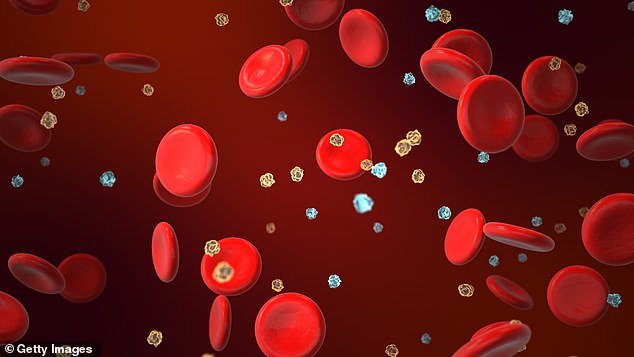
This occurs when the sugars floating in the bloodstream react spontaneously with proteins in tissues such as our muscles and organs.
We’ve all unknowingly seen the consequences of glycation without realising it – chefs actually exploit this chemical reaction to make caramel. But when we consume lots of sugar, this caramelisation takes place in our body.

AGEs come into being through a chemical reaction called glycation, which happens when sugars in the bloodstream react with proteins in muscles and organs
According to Professor Kapahi, the fructose in fruit juice or sweets is one of the worst culprits as it’s absorbed quickly into the circulation, inducing glycation up to seven times faster than glucose. If you were able to examine a sample of your blood after a particularly intense fructose binge, the sheer amount of glycation taking place would cause it to temporarily resemble liquid caramel.
The fructose in whole fruits, on the other hand, is much less damaging because the fibre and other nutrients slow down the absorption, and the benefits for the body from the many vitamins and minerals and plant chemicals in whole fruits far outweigh any issues posed by the fructose. The major problem with glycation, as Professor Kapahi and others have shown, is that it progressively changes the shape, structure and function of many of the 20,000 or so proteins in your body. They make you look older (see box), and make you feel older, too – for instance, affecting the proteins in our tendons, cartilage, joints and muscles.
More terrifying are the invisible consequences – over time glycation can alter the elasticity of the heart and the lining of the arteries that supply blood to the brain, leaving the brain physically softer and more likely to deteriorate. Studies have shown we can see the beginnings of this after just ten consecutive days on a high-sugar diet.
It turns out that AGEs are even linked to cancer, acting as a fuel for tumours by persistently activating a switch in the immune system called RAGE (Receptor for Advanced Glycation End Products), which generates damaging amounts of inflammation.
If it doesn’t induce cancer first, copious consumption of sugar will also increase your chances of getting dementia, driving the formation of toxic plaques of beta-amyloid protein that are a hallmark of Alzheimer’s disease. This is because when this protein becomes glycated, it changes shape, becoming stickier, more toxic and increasingly prone to gathering in clumps.
After hearing all this I was ready to quit sugar and refined carbohydrates for good. But I was puzzled – how have AGEs have remained below the radar?
The problem is that they’ve been invisible, as there’s been no easy way of telling how many you have – until now. A Dutch company called Diagnoptics has developed the world’s first tool for measuring these toxins.
The AGE Scanner works by shining light of certain wavelengths on the skin, and by measuring the reflected glow it can estimate how many AGEs are present. Diagnoptics have compiled a vast dataset showing that mid-lifers with higher-than-average levels of AGEs are five times more vulnerable to developing a disease. On the other hand, those who reach 80 with fewer AGEs than average are much more likely to live well into their 90s and beyond.
After ordering the AGE scanner, which is a bit like the ultrasound scanners used in pregnancy tests, I was able to test it on myself at home. It took just 12 seconds to inform me that I was doing OK, at least when it came to AGEs, computing my biological age as a year younger.
And the good news amid this rather sobering story is that our body has dedicated enzymes that can clear AGEs with the help of our kidneys, and overall they do a remarkably efficient job. Estimates suggest that more than 70 per cent of the AGEs we produce are safely removed, and some people, genetically blessed with particularly active enzymes, may do even better.
The bad news is that the quantity of AGEs in our bodies is generally thought to be going up, something that might explain the rising number of young people getting diseases such as bowel cancer. This is partly because we’re consuming more added sugars. But the second reason is quite different.
From Sunday roasts to summer barbecues, it turns out that the delectable flavours, aromas and crispiness of some of our favourite foods comes from our taste buds sensing the presence of what are known as ‘preformed’ AGEs.
For the glycation reaction doesn’t only take place inside your body: it plays a dominant role in much of our cooking. As an example, humans have been addicted to the delicious browning that forms when meat is exposed to high heat, probably ever since we discovered fire. Whether it’s fried steak, hot dogs on the BBQ or grilled bacon, the taste is mouthwatering because you’re forming AGEs in the food.
‘I believe that AGEs signal to the brain that a particular food contains sugar, and so lots of energy,’ Professor Kapahi said. ‘It’s saying, “OK, go have more of it,” because back then, you couldn’t be sure where the next meal was coming from.’
He believes that this simple connection explains why, despite decades of health warnings, humans find it almost impossible to stop eating certain unhealthy foods – and this has been exploited by the food industry. Through the use of extensive heat and added sugars to stimulate glycation and create an irresistible crunchiness, the addictive nature of many of the world’s best-selling foods is driven by pre-formed AGEs.
‘Food companies spend thousands or sometimes millions of dollars on flavouring experiments to get the toastiness of breakfast cereal just right,’ Professor Kapahi said. ‘But what that really means is actually getting AGEs right.’
Dr Jaime Uribarri, a kidney specialist at the Icahn School of Medicine at Mount Sinai in New York – and the world’s leading expert on preformed AGEs –explained that whole foods such as fruits, vegetables and whole grains contain negligible (fewer than 50 per 100g) quantities of preformed AGEs (perhaps why they’re less binge-worthy).
Even when roasted or fried, levels remain low, something that he believes is due to their high water content and the presence of vitamins and antioxidants. The same seems to be true for dairy products that contain a lot of moisture, such as yogurt – although if you’re consuming sugary ice cream or flavoured yogurts, that will of course still stimulate glycation within your bloodstream.
With ultra-processed foods, it’s easy for the quantity of preformed AGEs you’re ingesting to quickly spiral to considerable numbers.
But even within relatively healthy foods, AGEs can ramp up when we seek to add crunch – roasted sunflower seeds have 4,693 AGEs compared with 2,510 for the raw equivalent. However, as soon as animal fat and dry heat get involved, preformed AGEs soar by anywhere between ten and a hundredfold, making that food ever more palatable.

Any form of sugar, whether fructose (found in fruit juice, sweets and breakfast cereals), sucrose (better known as table suga) or glucose (in all carbohydrate), will give rise to AGE
Dr Uribarri told me that while researchers have estimated that our bodies can cope with ingesting approximately 15,000 preformed AGEs each day, people who eat a diet rich in grilled or roasted meat, and fat-rich and heavily processed foods, could easily be consuming well in excess of 20,000.
So what can we do to limit our exposure? We can opt for more foods with a lower AGE content, but that’s not so easy as preformed AGEs are present in so many things that we crave. But we can increase the proportions of whole or unprocessed foods in our diet. We can also limit AGEs by making adjustments to the way we cook.
Research from Harvard, which has shown associations between red meat and cancer and diabetes, indicates that it’s not only the amount of red meat that you consume, it’s how it’s prepared. The higher the temperature, the higher the risk of creating more AGEs.
Even if we do this at least some of the time – two or three days per week – that could make a big difference over the course of years and decades.
To find out more I go to a concrete bunker carved into the hills of the Basque coastline, to the Basque Culinary Center, which serves as a hub for producing great-tasting food without accumulating a glut of AGEs.
I was greeted by Nahuel Pazos, a chef who’s spent most of his career working in some of Spain’s most famous restaurants. Now, he spends his time working alongside academics at the nearby University of Navarra to design practical, low-AGE recipes to mitigate or slow down the progression of conditions ranging from type 2 diabetes and irritable bowel syndrome to cognitive decline.
Each month, up to 80 people at a time from across the region with these various conditions are bussed to the centre for government-funded masterclasses with Pazos and his chefs, to learn the secrets of low-AGE cooking.
This means instead of exposing food to intense dry heat, it is cooked at lower temperatures for longer, and with ample moisture, such as in soups or stews or steaming.
Some AGEs researchers have suggested that the traditional practice in many Asian countries of cooking with more moisture may contribute to the much lower incidence of overall cancers on the Asian continent, with UN statistics suggesting there are 40 per cent fewer cancer cases per 100,000 people than in Europe. Research shows that poached or steamed chicken holds less than a quarter of the AGE content of roasted or grilled chicken.
And slower cooking – cooking for longer, over lower heat – should be our mantra: scrambled eggs cooked over medium-low heat contain more than 50 per cent fewer AGEs than eggs scrambled over high heat.
Of course, there are times when we will want to use high heat, and in these cases, Pazos told me the best option is to use technologies which cook food as quickly as possible, such as air fryers and even the microwave, as opposed to traditional pan frying or oven roasting, although this will still generate more compared with steaming or boiling.
For frying, Pazos suggests putting a layer of greaseproof parchment paper in the bottom of the pan as this limits glycation (by reducing direct exposure to heat).
Use marinades such as lemon juice or vinegar, and spices – reducing the pH of food (making it more acidic) can inhibit the glycation reaction. For example, if you marinate a beef steak for one hour before frying it, preformed AGEs drop by half.
Marinating doesn’t have to be a lengthy process. Before cooking a chicken breast, Pazos suggested marinating it in a mix of lemon juice, olive oil, cumin, black pepper and paprika for 15 minutes. And coating meat and fish in various spices may also help reduce the presence of preformed AGEs.
Researchers say that as we age, it’s all the more important to try to consume, on average, a low-AGE diet (particularly if you’ve already developed a chronic illness such as cognitive decline, type 2 diabetes or kidney disease).
Yet I still found myself torn. While intrigued at how low-AGE food might slow my own rate of ageing, the idea of permanently abandoning desserts, and all the many delicious flavours driven by glycation for good, still felt like an impossible choice.
Pazos agreed. His time at the Basque Culinary Center had proven something of an epiphany, but he felt the secret is to balance occasional necessary indulgences within a healthy dietary pattern.
He said: ‘Now I always have vegetables with every meal. But I think you have to find an equilibrium, because I’m a chef and for me, cooking and eating is happiness.’
- Adapted from The Age Code by David Cox (Fourth Estate £22), to be published April 23. © David Cox 2026. To order a copy for £19.80 (offer valid to April 18, 2026; UK P&P free on orders over £25) go to www.mailshop.co.uk/books or call 020 3176 2937.
