

A pioneering blood test that can detect more than 50 cancers before symptoms appear could save tens of thousands of lives a year, promising new research suggests.
Results of an NHS-backed trial show the Galleri test – dubbed ‘the Holy Grail’ for cancer – helps flag four times as many cancers when added to current screening programmes.
In practice this could prevent one in five late-stage diagnoses – a major contributor to the 170,000 cancer deaths a year in the UK.
Doctors involved in the trial say the potential impact on survival is enormous, with up to 30,000 lives saved every year.
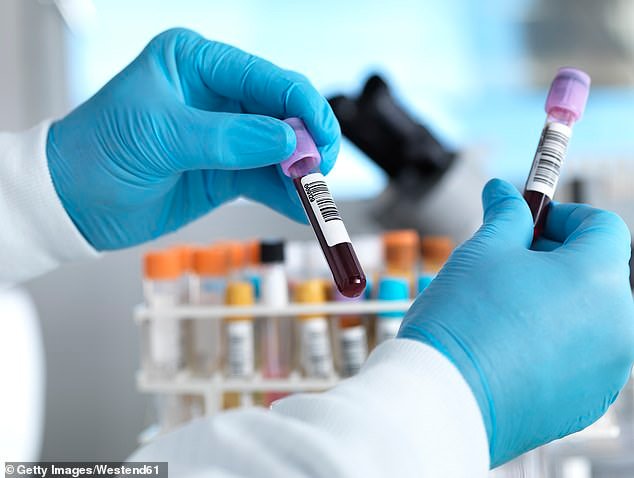
The test, made by American pharmaceutical firm Grail, looks for fragments of cancerous DNA that have broken off a tumour and are circulating in the blood.
This ‘signal’ allows doctors to pick up traces of the disease months or even years before symptoms appear, when cancer is at its most treatable.
The trial, launched by the NHS in 2021, involved testing more than 142,000 adults aged 50 to 77, with nearly one in 100 getting a positive result over three tests.
In 52 per cent of these cases, cancer was later confirmed.

The test, analyses blood samples for tiny fragments of cancerous DNA
The trial also saw a 25 per cent fall in the number of cancers first picked up in A&E, when patients are already severely unwell – one of the strongest predictors of poor survival.
Doctors said this shift alone could transform outcomes for thousands of patients.
Presenting the results ahead of the annual meeting of the American Society of Clinical Oncology (ASCO), Sir Harpal Kumar, Chief Scientific Officer of Global Clinical and Medical Affairs at GRAIL labelled the findings ‘extremely important’.
He added: ‘Galleri represents a potential transformational shift in cancer detection, moving us to a more comprehensive and proactive approach where doctors can offer treatment and not just end of life care – that is the difference,’ he said.
It is also hoped it will reduce the number of false positives thrown up by current screening programmes, which include those looking for early-stage breast, bowel and cervical cancers.
An estimated three million people in the UK are sent for urgent investigations every year because they have symptoms that might be cancer.
Just six per cent of these are handed a diagnosis, meaning they may have been subjected to unnecessary invasive testing and worry.
Sir Kumar continued: ‘If we had a test that was far more predictive, we would be able to use some of that diagnostic capacity where it would deliver greater benefit.

Jan Kitching was diagnosed with stage 2 bowel cancer after her third blood test
‘As treatment options continue to advance, screening frameworks must evolve in parallel.’
The trial was criticised earlier this year for failing to meet an endpoint of reducing the number of cases caught at stage three and four – when the disease has already spread to another part of the body.
But the newly published results tell a different story.
The trial showed particularly promising results for certain types of cancer. Stage 4 oesophageal cancer diagnoses fell by more than 57 per cent among those offered the test.
For bowel cancer, stage 4 diagnoses were reduced by over a third.
In England, the survival rate for bowel cancer diagnosed at stage 4 is shockingly low, with just 11 per cent of patients reaching this milestone. But when it’s caught at stage three, 64 per cent of patients have a chance of surviving their cancer for five years.
This, doctors say, makes a profound difference.
‘We did see a substantial decrease in stage 4 cancers, but this was outweighed by an overall increase in the number of stage 3 cancers picked up,’ Sir Kumar conceded.
The trend could also be due at least in part to the fact that the blood test is able to detect cancers that there are currently have no screening programmes for, such as pancreatic, ovarian, liver, oesophageal and bladder cancers.
He added: ‘The trial has revealed just how much undiagnosed stage 3 cancer is already prevalent in the population before any screening commences.
‘The Government has anticipated that multi-cancer screening will be an important part of the cancer landscape in the next few years and there’s lots of really encouraging data here which I hope will mean we will be able to move forward quickly.
‘For a long time, we’ve known in the UK that our cancer outcomes aren’t as good as other countries – and that is because of late diagnosis.’
Dr Thomas Round, a GP at Bromley by Bow Health Centre and academic at King’s College London, who was involved in referring patients who received a positive test into the NHS for follow-up, added: ‘This is potentially game-changing and we are very excited about where this goes next – especially for emergency diagnoses.
‘The reduction in the number of patients diagnosed with cancer after A&E activity is really important from an NHS viewpoint.
‘The test would also fit very well into the NHS because we have existing pathways that we can utilise.
‘But we need more investment in diagnostics – from hospital to community and from analogue to digital – and this all fits around how we can detect cancer earlier.’
Professor Peter Johnson, National Clinical Director for Cancer at NHS England, said: ‘Finding cancers at an earlier stage is central to the National Cancer Plan.
‘The NHS will explore every opportunity to detect more cancers sooner and save more lives, building on the success of initiatives like the lung cancer screening programme with testing trucks in supermarket car parks and football grounds helping to detect 10,000 cancer cases, with most at an early stage.
‘We look forward to seeing the data from the trial in detail, to help us make decisions on what this could mean for the NHS in the future.’

Jan now hopes the blood test will be rolled out on the NHS
As an active grandmother of eight and full-time carer to her elderly father, Jan Kitching, 69, from Gateshead, had no reason to suspect she was just months away from a life-threatening diagnosis.
So when her GP practice invited her and her husband to join a trial aimed at detecting cancer in its earliest stages, she didn’t think twice.
‘Three blood tests that might help someone in the future get potentially life-saving treatment when its most effective – it was a no brainer,’ she said.
Her first two tests were clear. But on 2 May 2024, the day before her 67th birthday, she received a call telling her the test had detected a possible colorectal cancer signal.
‘I just couldn’t believe it,’ she said. ‘I had no symptoms, a negative stool test just months before and there was no family history of the disease.’
Within two weeks, she was sent for a colonoscopy.
‘That’s when it really sank in,’ Jan said. ‘Waiting for the results, I feared the worst. I even started planning my own funeral.’
Further tests confirmed stage 2 bowel cancer. On 17 June, Jan underwent surgery to remove the tumour that thankfully hadn’t spread.
Two weeks later, she was back caring for her 94-year-old father, surrounded by her grandchildren, cancer free.
And she believes the test saved her life.
‘I dread to think what would have happened without that test,’ she said. ‘I had no warning signs at all. I led an active lifestyle, I’ve never smoked, and I rarely drink.
‘Without the blood test, the cancer could easily have progressed, and I might not be here.
‘The first thing everyone asks me now is: ‘Where can I get that test?” I just hope the NHS finds a way to offer it.’
