


Floating Cities, Fast Infections: The Unique Epidemiological Challenge of Cruise Travel
To the millions of travelers who board them every year, cruise ships are the ultimate symbol of relaxation—a seamless “floating vacation.” But to epidemiologists and public health experts, these vessels are something else entirely: high-density microcosms of human interaction.
A cruise ship functions as a temporary city at sea. It packs thousands of people into an interconnected network of restaurants, theaters, elevators, and corridors. While this design is the pinnacle of convenience, it also creates an environment where an infection—once introduced—can traverse the entire “city” with startling speed.
As the world watches the unfolding crisis aboard the MV Hondius, where a rare hantavirus outbreak has already claimed three lives, it is a stark reminder that public health is shaped as much by architectural design as it is by germs.

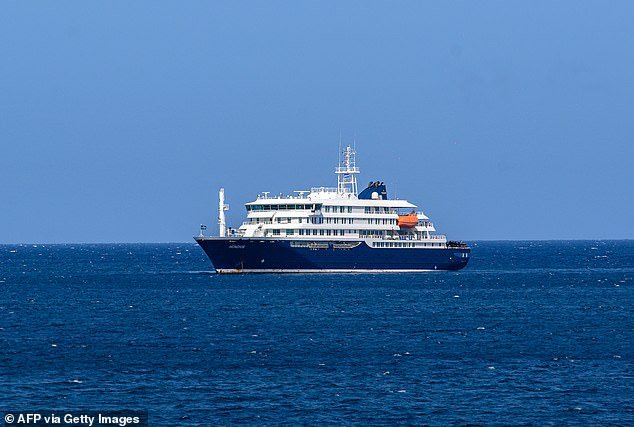
A view of the cruise ship MV Hondius stationary off the port of Praia, the capital of Cape Verde. Oceanwide Expeditions, the company that operates the cruise ship, said three people are dead and eight others are sick from a suspected viral outbreak

Health workers are seen evacuating a patient from luxury cruise liner MV Hondius, which is the center of a hantavirus outbreak
The “City at Sea” Problem: Why Illness Spreads Fast
When thousands of individuals share the same air, water, and dining surfaces for days at a time, the traditional barriers to disease transmission begin to dissolve. Public health experts point to three primary “circulatory systems” on a ship that can facilitate an outbreak:
1. The Shared Table (Food & Surfaces)
Buffet-style dining is a staple of the cruise experience, but it is also a primary highway for Norovirus. Often called the “stomach bug,” norovirus strikes 20 million Americans annually. On a ship, shared utensils and high-touch surfaces mean that an asymptomatic carrier can contaminate an entire dining hall before they even feel their first symptom.

2. The Water Loop (Legionnaires’ Disease)
Unlike norovirus, Legionnaires’ disease—a severe form of pneumonia—isn’t usually spread person-to-person. Instead, it lives in the ship’s plumbing.
-
The Risk: Tiny droplets from contaminated hot tubs, showers, or outdoor whirlpools are inhaled by passengers.
-
Historical Precedent: Outbreaks on famous vessels like the Celebrity Mercury and Carnival Triumph have frequently been traced back to these shared water systems.
3. The Breathable Air (Ventilation & Enclosure)
The Diamond Princess COVID-19 outbreak in 2020 became a global case study in air quality. Researchers found that crowded, indoor gathering spaces—theaters, bars, and corridors—act as incubators if ventilation systems are not equipped with high-efficiency filters and adequate fresh air circulation.
The 2026 MV Hondius Outbreak: A Rare Warning
The current situation aboard the Dutch-flagged MV Hondius has sent shockwaves through the industry because hantavirus is exceptionally rare on cruise ships. Typically spread by rodents, hantavirus is now at the center of a “close quarters” crisis.
With at least eight people sickened and three dead, health workers in protective gear are now a common sight at the port of Praia. This outbreak highlights the vulnerability of the cruise ship’s “interconnectedness”—once a virus enters the crew quarters or the food service chain, the ship’s design makes “stopping the bleed” a monumental task for limited on-board medical facilities.

The “Demographic Vulnerability” Factor
Cruise health is further complicated by who is on board. These vacations are disproportionately popular with older adults and those with long-term health conditions.
-
What might be a 24-hour stomach bug for a young traveler can lead to life-threatening dehydration for a senior.
-
Respiratory infections that cause a mild cough in one passenger can quickly escalate into pneumonia for another.
While ships have medical centers, they are designed for first aid and short-term stabilization, not for managing a large-scale, fast-moving respiratory or viral emergency.
How to Protect Yourself: A Traveler’s Protocol
While many voyages pass without incident, the basic structure of cruise travel remains a challenge. If you are planning a trip, experts recommend the following safety steps:
-
Pre-Boarding: Ensure all routine vaccines are up to date and verify that your travel insurance specifically covers illness-related disruptions and medical evacuations.
-
The Soap Rule: Hand sanitizer is a helpful backup, but it does not kill norovirus. Vigorous handwashing with soap and water is your most effective defense.
-
Early Reporting: The “hero” who tries to push through a fever or stomach pain is the one who puts the whole ship at risk. Report symptoms to the medical center immediately.
-
Water Wisdom: Be cautious with shared hot tubs if you have a compromised immune system, as these are the primary sites for Legionella bacteria.
The Bottom Line
Public health on the high seas is a delicate balance of early reporting, aggressive cleaning, and ship design. As the MV Hondius remains under a command post in Tenerife, it serves as a powerful reminder: on a cruise, you aren’t just sharing a vacation; you are sharing a biological ecosystem.
Adapted from insights by Vikram Niranjan, Assistant Professor in Public Health at the University of Limerick.
