


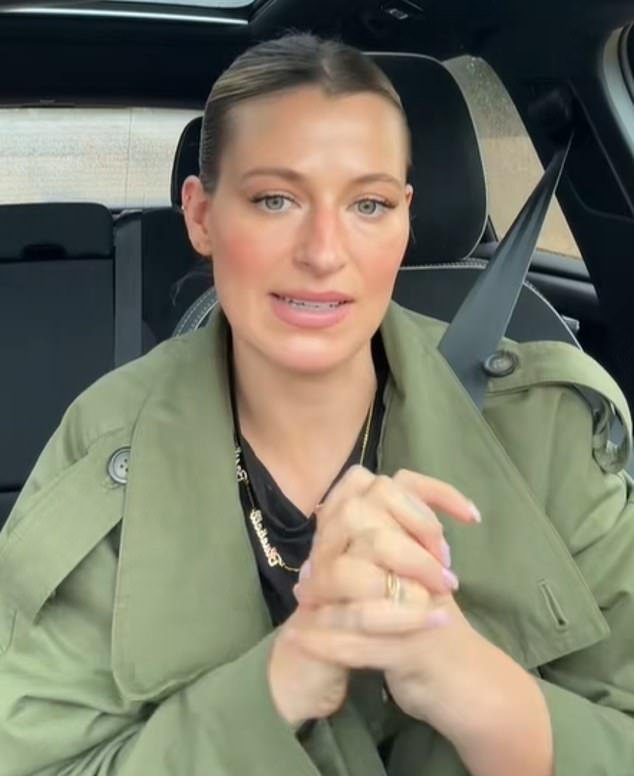
💔 Meggan’s Story: The “Euphoria to Heartbreak”
Fitness influencer Meggan Grubb and her husband, Niall Kirkland, were months into trying for a sibling for their daughter, Winnie. Around Valentine’s Day, Meggan received her first positive pregnancy test.
-
The Timeline: Just five days after that initial positive result, Meggan began bleeding.
-
The Emotional Toll: Meggan describes the shift from the “euphoric feeling” of a shifted future to the “unbearable” sensation of that future being snatched away.
-
The Terminology: Meggan expressed a strong dislike for the term “chemical pregnancy,” noting that it makes the experience sound clinical and “less real” than other losses.

🧬 What is a Chemical Pregnancy?
A chemical (or biochemical) pregnancy is a very early miscarriage that typically occurs around the five-week mark. It is called “chemical” because the pregnancy is only detectable via a chemical blood or urine test, rather than an ultrasound.
| Feature | Details |
| Detection | Positive home test followed quickly by a negative test or a period. |
| Primary Cause | Usually chromosomal abnormalities in the embryo (DNA issues). |
| Physical Signs | Mild cramping and a bleed similar to a heavy period. |
| Modern Context | More common today because sensitive digital tests can detect hormones before a missed period. |
Why it happens: Most chemical pregnancies occur when an embryo has the wrong number of chromosomes and cannot develop, or when the uterine lining prevents proper implantation.

⚖️ The Push for NHS Reform
Meggan has partnered with the charity Tommy’s to challenge current medical protocols in the UK.
-
The “Three Miscarriages” Rule: Currently, the NHS generally only offers specialized investigations or follow-up care after a woman has experienced three consecutive miscarriages.
-
The Goal: The campaign calls for support and medical reviews after the first loss.
-
Proven Impact: A pilot study by Tommy’s suggested that providing a specialist consultation after a first miscarriage could help prevent more than 10,000 pregnancy losses per year without significantly increasing the NHS workload.
-
Progress: Scotland has already begun embedding this new model of care into its health system.

🫂 Validating the Grief
Meggan’s decision to share her story online triggered an outpouring of support from women who had felt they had to keep their early losses secret. Her message remains clear: the timing of the loss does not dictate the depth of the grief.
“A loss is a loss… they all count.” — Meggan Grubb
Are you looking for more information on the resources available for early pregnancy loss, or are you interested in the specific medical research Tommy’s is currently funding?
