


🧠 The 97% Accuracy Breakthrough: How It Works
In a study published in the journal Small in early May 2026, scientists at Oregon Health & Science University (OHSU) revealed a new “liquid biopsy” technique that can identify pancreatic cancer with near-perfect accuracy.
-
The Technology: The test uses a microchip that delivers a brief electronic jolt (dielectrophoresis) to a small blood sample.
-
The Targets: This pulse captures nanoparticles—tiny messengers shed by tumors into the bloodstream. These particles carry the tumor’s specific DNA and protein biomarkers.
-
The Result: Researchers then apply fluorescent staining. The more cancer biomarkers present, the brighter the electrodes glow. In blinded trials, the chip distinguished cancer from benign conditions (like pancreatitis) with 97% accuracy.
-
Clinical Timeline: While the results are revolutionary, lead researcher Dr. Stuart Ibsen suggests the test is approximately five years away from widespread clinical use.

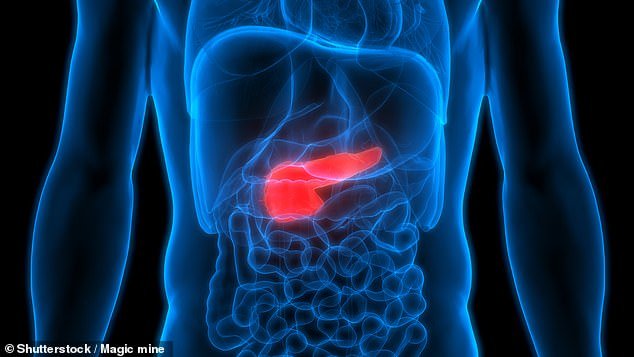
A newly developed test can identify symptomless pancreatic cancer with 97 per cent accuracy
🩺 Why Early Detection is the “Holy Grail”
Currently, pancreatic cancer is notoriously lethal because it is typically diagnosed at Stage 3 or 4. By this point, the cancer has often invaded the bile ducts or spread to the liver and lungs.
2026 Survival Realities:
| Diagnostic Stage | 5-Year Survival Rate |
| Localized (Confined to Pancreas) | 44% |
| Regional (Nearby Spread) | 16% |
| Distant (Metastasized) | 3% |
| Overall Average | 13% |

Harry Potter actor Alan Rickman – pictured in 2015 – died in 2016 from pancreatic cancer

💊 New Treatment Frontiers: The Spanish “Triple Therapy”
In early 2026, researchers at the Spanish National Cancer Research Centre (CNIO), led by Dr. Mariano Barbacid, reported a massive preclinical victory. They developed a triple combination therapy that completely eradicated pancreatic tumors in mice.
-
The Strategy: The treatment blocks three signaling pathways (KRAS, EGFR, and STAT3) simultaneously, leaving the tumor with no “escape route” to develop resistance.
-
Retraction Scrutiny: As of late April 2026, the study (published in PNAS) was retracted due to an undisclosed conflict of interest regarding financial ties to a startup. However, the journal emphasized that the scientific validity of the results is not in doubt, and the team is currently resubmitting the data for a fresh review.
⚠️ Symptoms & Risk Factors to Watch
The pancreas sits deep in the abdomen, meaning tumors can’t be felt. You should consult a GP if you experience:
-
Jaundice: Yellowing of the skin or eyes.
-
Unexplained Weight Loss: Often accompanied by a loss of appetite.
-
Mid-Back Pain: Pain that starts in the stomach and radiates to the back.
-
New-Onset Diabetes: Sudden changes in blood sugar in adults over 50 can sometimes be an early warning sign.
Who is at Highest Risk?
-
Age: 90% of cases are in those over 55; the peak risk is 75+.
-
Genetics: Roughly 10% of cases are linked to family history (including BRCA mutations).
-
Lifestyle: Smoking and obesity remain the most significant modifiable risk factors.
Are you or a loved one looking for information on clinical trials for these new detection methods, or are you focused on managing a current diagnosis?
