

📝 The Long Road to “The Right Time”
For years, the timing was never quite right. Caroline spent her younger years travelling the world as a cruise ship entertainer. It wasn’t until she met her husband, Richard, at age 44 via Match.com that the dream of motherhood moved to the forefront.
After two years of unsuccessful natural attempts, the couple turned to IVF. Their journey took them to Palma, Mallorca, where they finally discovered a primary roadblock: undiagnosed endometriosis. Even after treating the condition, success remained elusive.
The Heartbreak of the Journey:
-
Round 1 & 2: Failed cycles.
-
Round 3 & 4: Two “chemical pregnancies” (very early miscarriages).
-
Round 5: A miscarriage at six weeks.
By the time Caroline approached her 50th birthday, she was ready to walk away. “I can’t do this to my body anymore,” she told Richard. But with two embryos remaining, they decided on one final “all-in” attempt.
“We did an early viable scan at six weeks and found out it was twins and we were absolutely flabbergasted. I was terrified—absolutely terrified because it was such an emotional rollercoaster last time.”

The “Double-Edged Sword” of Middle-Age Motherhood
At 51, Caroline gave birth to a son and a daughter at Royal Derby Hospital. While she describes herself as “over the moon,” she is candid about the reality of being an older parent. She refers to it as a “double-edged sword” where wisdom meets physical exhaustion.
| The Pros of Older Motherhood | The Challenges of the “Invisible Village” |
| Financial Stability: More settled and able to provide. | Physical Toll: Navigating post-partum recovery alongside perimenopausal hot flushes and “rage.” |
| Temperament: More patience, worldly wisdom, and a settled lifestyle. | Social Isolation: Friends are “empty nesters” or grandparents, leaving a void in relatable peer support. |
| Perspective: A deep appreciation for the children after years of loss. | Lack of Support: Husband returned to work after two weeks; family lived two hours away. |

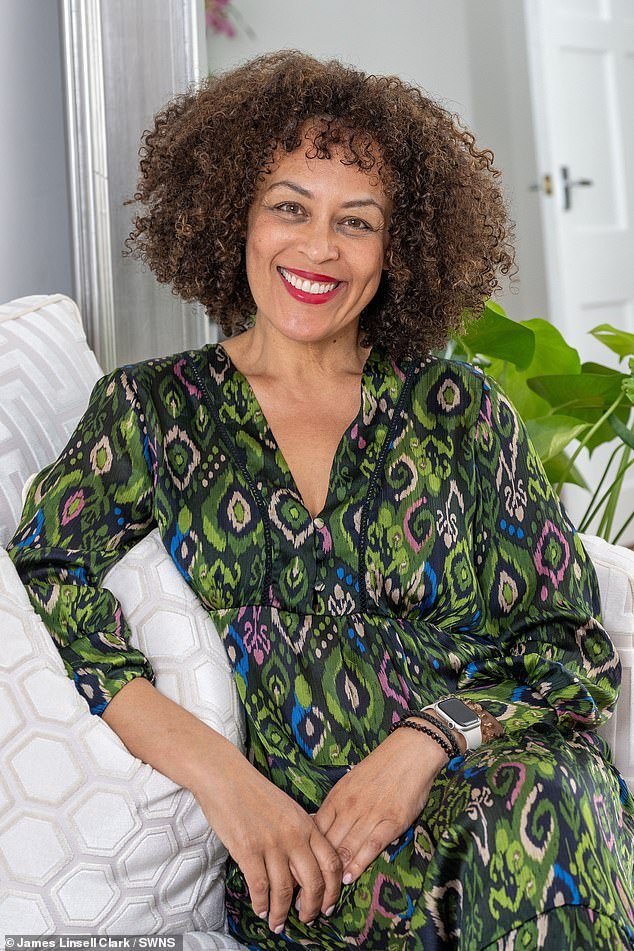
Ms Morgan welcomed a son and a daughter when she wa s 51

🎙️ Motherhood in Stereo: A New Platform for Support
Caroline’s experience with the “void” in her social life—where her peers were celebrating grandchildren while she was changing diapers—inspired her to launch the podcast “Motherhood in Stereo.” The platform serves as a space for “non-linear” parents to discuss birth trauma, IVF, adoption, and the specific hurdles of twin parenting. Her message to other women is simple: There is no universal timeline.
“I want to tell people there is hope and don’t give up,” Caroline says. “As long as you have a healthy womb, you can have a child whichever way that is.”

🩺 Medical Insight: Understanding the IVF Odds
As Caroline’s story illustrates, IVF success is heavily influenced by age. While she beat the odds, the statistical probability of a live birth drops significantly after age 40.
| Age of Woman | Success Rate (Live Birth per Cycle) |
| Under 35 | 29% |
| 38 – 39 | 15% |
| 40 – 42 | 9% |
| 43 – 44 | 3% |
| Over 44 | 2% |
Source: NHS / NICE Guidelines
What is a Chemical Pregnancy?
As mentioned in Caroline’s journey, a chemical pregnancy is a very early miscarriage. It occurs shortly after implantation—often before anything can be seen on an ultrasound—but late enough to produce a positive hCG (pregnancy hormone) test. For many women undergoing IVF, these represent a particularly painful form of “false hope.”
