


There is good evidence that you can feed your brain to help it run effectively and lower your dementia risk.
And for anyone thinking, ‘I’m too young to worry about that,’ consider this: It’s increasingly clear that brain changes linked to Alzheimer’s can start 30 years before symptoms appear, quietly building up over decades.
In fact, lifestyle choices and what we eat appear to have more of an impact in reducing the risk of Alzheimer’s than when the disease is established.
That’s why it’s important to take steps to safeguard your brain health from your 40s – or earlier.
The brain’s ability to cope with ageing and associated damage is shaped by everyday factors, such as adequate physical activity. Mental challenge also matters (to build cognitive reserve) – so, too, do sleep and overall health.
You also need to take action to reduce factors such as high blood pressure, which can impair blood flow and reduce the amount of nutrients reaching the brain.
Diets linked to better brain health tend to mirror guidance for heart health because they rely on the same network of blood vessels.

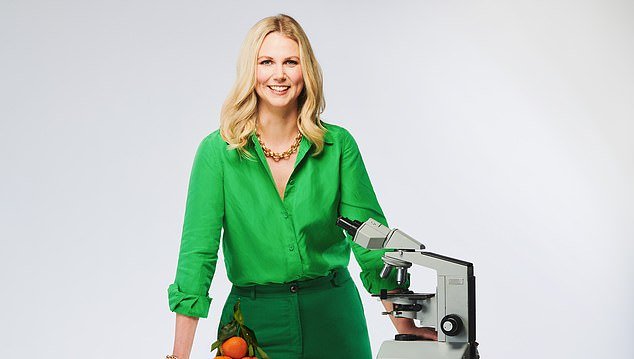
Lifestyle choices and what we eat appear to have more of an impact in reducing the risk of Alzheimer’s than when the disease is established, writes dietician Dr Emily Leeming

Eat leafy greens at least six times a week and other vegetables daily

Study after study shows that people who eat a Mediterranean-style diet have better brain health and lower Alzheimer’s risk
Study after study shows that people who eat a Mediterranean-style diet – lots of vegetables, beans and lentils, wholegrains, nuts, olive oil and fish, with less red meat and ultra-processed food – tend to have better brain health and lower Alzheimer’s risk.
Building on this, US researchers developed the MIND diet, a brain-focused version based on the Mediterranean and DASH diets (an approach developed to lower blood pressure), but which highlights ten foods to include within a brain-healthy eating pattern, while limiting five less healthy types.
These ten foods are:
- Leafy greens – six or more servings a week.
- Other vegetables – at least one serving daily.
- Berries – two or more servings a week.
- Nuts – e.g. walnuts and almonds; at least five servings a week.
- Beans and legumes – three or more servings a week.
- Wholegrains – such as wholewheat pasta and quinoa; three or more servings a day.
- Fish – particularly fatty fish, such as mackerel and salmon; at least one serving a week.
- Poultry – two or more servings a week.
- Olive oil – for cooking.
- Red wine – in moderation; a small glass a day (though later research has since highlighted that even this moderate amount of alcohol was linked to slightly worse brain health).
Meanwhile, the following foods should be kept to a minimum:
- Red and processed meat – no more than four times a week.
- Sugary foods – such as pastries and sweets.
- Butter
- Whole-fat cheese
- Fried foods
The researchers behind the MIND diet looked for a dietary pattern that could help protect brain cells, reduce inflammation and support blood flow to the brain.
Rather than any single food having a dramatic effect, it’s the overall diet that is key.
And the evidence is that this approach works, even helping when adopted later in life.
Tracking the progress of older adults in retirement communities, researchers found those whose eating habits most closely matched the MIND diet experienced slower mental decline, roughly equivalent to the difference seen in someone 7.5 years younger, according to a 2015 study in the journal Alzheimer’s & Dementia.

Everyone experiences dementia differently. Use this checklist to help you make a note of your symptoms before you talk to your GP.
That year, in the same journal, researchers also looked specifically at Alzheimer’s and found that people who followed the MIND diet most closely halved the risk of developing the disease, compared with those who followed it the least.
Even following the diet more loosely was linked to about a 35 per cent lower risk – so you don’t have to stick to it perfectly to see a possible benefit.

For instance, this could mean building meals around vegetables and beans; using olive oil instead of butter; eating fish a couple of times a week; adding nuts or berries to snacks – and cutting back on fatty cuts of meat and fried takeaways.
More recent research has backed up the original MIND findings: a 2023 review, published in JAMA Psychiatry – which drew on 11 studies with 224,000 participants, who were middle-aged or older – found those who stuck most closely to the diet were 17 per cent less likely to develop dementia than those who followed it the least.
Some supplements, such as omega 3, or compounds found in foods such as berries or cocoa, have shown mixed results in studies – and they’re likely to work best as whole foods within a healthy diet.
Some people are genetically more likely to develop Alzheimer’s. But genes don’t determine destiny. Looking after your health through diet and lifestyle is within your control – and may meaningfully shift the odds.
