
Subscribe to Updates

    Get the latest creative news from FooBar about art, design and business.

    What's Hot

    FDA urgently recalls ice pops over undeclared ingredients linked to behavioral issues and cancer risk

    Health chiefs tell diners to check restaurant hygiene ratings as salmonella cases reach decade high

    Suspected Ebola case in Austria: patient returning from Uganda admitted to hospital with possible symptoms of the highly infectious virus with no vaccine

    Facebook Twitter Instagram
    Facebook Twitter Instagram
    HealthOptiBodyHealthOptiBody
    Subscribe
    • Home
    • Healthy News

      In a Vaccine-Skeptical California County, a Potential Playbook To Contain Measles

      Listen to the Latest ‘KFF Health News Minute’

      Nurse Convicted in Patient’s Death Turns Fatal Drug Error Into a Cautionary Tale

      Montana Hurries To Adopt Trump’s Medicaid Work Rules Amid Budget Woes

      Readers Address Drugged Driving, Suicide Prevention, Worker Shortages

    • Healthy Food
    • Lifestyle
    • Disease
    • Nutrition
    • healthy living
    HealthOptiBodyHealthOptiBody
    Home»Editor’s Picks»Not an early morning person? You’re more at risk of developing bipolar, finds new study
    Editor’s Picks

    Not an early morning person? You’re more at risk of developing bipolar, finds new study

    Hill CastleBy Hill CastleUpdated:03/29/2026No Comments4 Mins Read
    Facebook Twitter Pinterest LinkedIn Tumblr Reddit WhatsApp Email
    Share
    Facebook Twitter LinkedIn Pinterest WhatsApp Email


    By CIARAN FOREMAN, REPORTER

    Published: 06:35 EDT, 29 March 2026 | Updated: 06:40 EDT, 29 March 2026


    People who stay up later at night may be more likely to have traits of bipolar, a new study has found. 

    Researchers found that people with the evening chronotype – commonly referred to as night owls – found it harder to manage their emotions and displayed more bipolar-like behaviours.

    Roughly one in three British adults class themselves as night owls, preferring to work later at night because that is when their energy and creativity levels peak.

    The new study of 2,031 adults in Italy found that 22.8 per cent considered themselves as night owls, while 22.2 per cent preferred to be up in the morning – known as early birds – and 55 per cent did not state a preference.

    From their survey, it was uncovered that the night owls reported significantly higher traits of depression, anxiety, irritability and displayed more unpredictable moods.

    They also showed higher levels rates of emotional dysregulation – the term for a person’s ability to handle the intensity of their emotions – compared to early birds and those who did not have a preferred time.

    Lead author G. Pontoni said: ‘Our findings strongly support a link between the evening chronotype and affective temperaments associated with bipolar vulnerability. 

    ‘Individuals with later sleep-wake rhythms are more likely to experience emotional dysregulation and subthreshold bipolar features, even in the general population.’

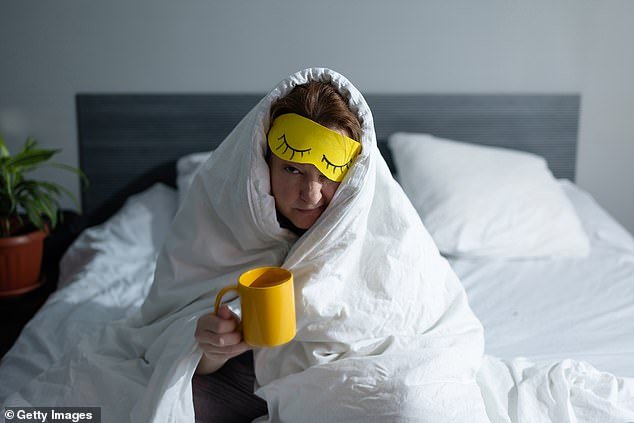
    Night owls may be more likely to have traits of bipolar, a new study has found

    Night owls may be more likely to have traits of bipolar, a new study has found

    The study also found that night owls scored higher on questionnaires linked to bipolar-like symptoms, meaning they show more signs associated with the disorder than the other surveyed.

    Smoking was also linked to higher bipolar-like traits, while good sleep quality appeared to act as a protective factor, being associated with lower levels of these tendencies.

    Professor Andrea Fiorillo, President of the European Psychiatric Association, commented: ‘These results underline the relevance of chronotype when assessing mood symptoms and emotion regulation difficulties.

    Considering sleep–wake preferences alongside standard clinical evaluation may help clinicians better characterise risk and tailor follow-up where appropriate.’

    Night owls often have to set numerous alarms in the morning to wake themselves up, while early risers often spring out of bed – sometimes even without the need for an alarm.

    Many early risers also go to the gym before work in the morning, and feel more productive while the sun is coming up.

    Meanwhile, night owls are happy to have a cup of coffee at night or start tasks late in the evening when most people are typically winding down and getting into bed.

    A study conducted in 2024 by from Imperial College London said that night owls displayed ‘superior cognitive function’.

    Well-known night owls are often cited to include figures such as Winston Churchill, Barack Obama and Robbie Williams.


    WHAT IS BIPOLAR DISORDER?

    Bipolar disorder is a brain disorder which causes unusual and often sudden changes in mood and energy levels.

    WHAT ARE THE SYMPTOMS?

    Moods of those with bipolar disorder range from periods of extreme elation and energy (known as a manic episode) to periods of extreme somberness and lack of energy (known as a depressive episode).

    HOW IS IT DIAGNOSED?

    According to the International Bipolar Foundation, sufferers are diagnosed with rapid cycling if they have four or more manic, hypomanic, or depressive episodes in any 12-month period.

    This severe form of the condition occurs in around 10 to 20 percent of all people with bipolar disorder.

    WHAT CAUSES IT?

    Currently it is unknown what is the cause of bipolar disorder, which affects around 5.7 million US adults aged 18 or older.

    Scientists say genetics could play a role or that those with a a family history of bipolar disorder are more likely to have it.


    Share or comment on this article:
    Not an early morning person? You’re more at risk of developing bipolar, finds new study


    Bipolar Disorder Chronotype Mental Health Night Owls Sleep Patterns
    Previous ArticleTravel bug fears: Doctors urge Brits jetting off abroad over Easter to be extra vigilant amid rise in holidaymakers returning with diseases such as gonorrhoea, malaria and measles
    Next Article What HAS Aaron Taylor-Johnson done to his face? Plastic surgeons weigh in as ‘world’s most handsome man’ appears looking unrecognisable at Fuze premiere
    Hill Castle
    • Website

    Related Posts

    Carpal Tunnel Syndrome Cases Surge 25 Percent in Britain as Experts Link Texting to Quadrupled Risk of Debilitating Wrist Condition

    Side Sleeping Proves Most Effective Treatment for Obstructive Sleep Apnea in 75% of Patients with Severe Snoring Condition

    Three Simple Changes to Restart Muscle Growth After 60 and Achieve Your Dream Body

    Leave A Reply Cancel Reply

    Stay In Touch
    • Facebook
    • Twitter
    • Pinterest
    • Instagram
    • YouTube
    • Vimeo
    Don't Miss
    Healthy News

    One Major Effect Coffee Has on Your Body, New Study Says

    By Hill Castle0 Healthy News

    To understand the new smart monitors and other pro devices of tech health, we should…

    Do Antacids Affect Kidneys, and Also Lead to Osteoporosis?

    Spine Devices Market to Surpass US$ 17 Bn as Demand Rises

    5 Best Probiotic Supplements for Gut Health in 2021

    Our Picks

    FDA urgently recalls ice pops over undeclared ingredients linked to behavioral issues and cancer risk

    Health chiefs tell diners to check restaurant hygiene ratings as salmonella cases reach decade high

    Suspected Ebola case in Austria: patient returning from Uganda admitted to hospital with possible symptoms of the highly infectious virus with no vaccine

    Thousands of men risk being condemned to an avoidable death as government advisors reject calls for a major prostate cancer screening programme

    Subscribe to Updates

    Get the latest creative news from SmartMag about art & design.

    Demo
    Facebook Twitter Instagram Pinterest YouTube
    • Home
    • Healthy News
    • Healthy lifestyle
    • Disease
    © 2026 DailyHealthybox. Designed by HealthOptiBody.

    Type above and press Enter to search. Press Esc to cancel.