

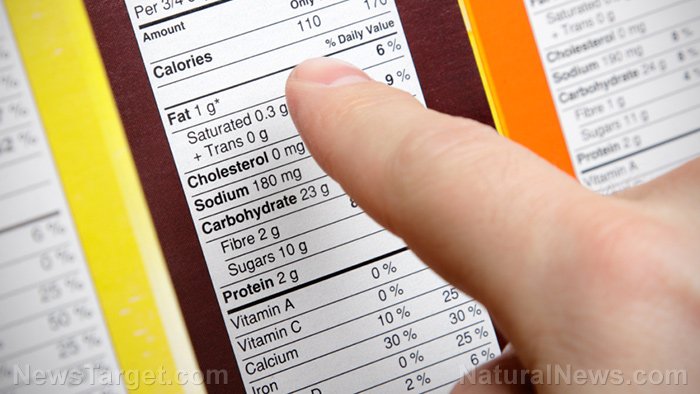

People who check the nutrition labels are more likely to eat healthier, according to a study led by researchers at the Miguel Hernandez University in Spain.
In the study, the researchers investigated how looking at nutrition labels affected the dietary intakes of over 1,000 university students. The participants were asked to answer whether they usually read nutrition labels on packaged foods. With their answers, they were classified as label-users or non-users. Their adherence to the Mediterranean diet was also evaluated using the relative Mediterranean Diet Score (rMED), in which positive scores are attributed to fruits, vegetables, legumes, fish, olive oil, and cereals. On the other hand, negative scores are attributed to meat and dairy products. Then, the total rMED scores were classified into three groups: Designating low, medium, and high adherence.
“Our approach contributes to exploring the role of nutritional labels use as a suitable tool to make healthier food choices from a different wider perspective based on dietary patterns such as Mediterranean Diet (MD), which can also indicate an overall healthy lifestyle,” said lead researcher Professor Manuela García-de-la-Hera.
Results of the study revealed that 58 percent of the population used nutrition labels. Label-users had a closer adherence to a Mediterranean-type of diet than non-users. In addition, label-users were also found to eat higher amounts of fruits, vegetables, and fish, and consumed less meat compared to non-users of labels.
In a sub-analysis, 738 of the participants were asked about their reasons for reading or not reading nutrition labels. Those who read labels reported that they did so mainly out of health concerns (e.g., adherence to a healthy diet, weight loss, or weight management). Conversely, those who admitted to not reading labels said they did not have enough time or were simply not interested.
100% organic essential oil sets now available for your home and personal care, including Rosemary, Oregano, Eucalyptus, Tea Tree, Clary Sage and more, all 100% organic and laboratory tested for safety. A multitude of uses, from stress reduction to topical first aid. See the complete listing here, and help support this news site.
“Our data are far from being able to establish a possible causal link between nutrition label use and higher adherence to MD, but they constitute a suitable rationale for replicating in other samples. Therefore, additional large-scale longitudinal studies are necessary to corroborate our findings and explore other aspects not covered in this study, such as nutritional knowledge, consumer preferences, or participant skills,” the researchers said.
Things you need to know about reading and understanding nutrition labels
Reading the nutritional information on the back of a packaged food may not be easy. Moreover, some people do not have the time to check the labels. Furthermore, brands use clever and misleading ways to convince buyers to buy their products. (Related: Nutrition labels confuse food shoppers; calls for simpler labels intensify.)
Here are three things you need to look for when reading a food label:
- Check the ingredient list – Ingredients on nutrition labels should be listed in descending order according to weight. Thus, if the first three ingredients include sugar or highly processed ingredients, you would not want to buy that product.
- Watch out for hidden sugars – Manufacturers can use different sugars with names that you would not recognize. In addition to “sugar” words, look for other terms such as invert sugar, dextrose, maltol, fructose, sucrose, syrup, and maltodextrin.
- Keep an eye on buzzwords – Manufacturers can trick you into thinking that their products are healthy with their labels. Some of the buzz words they use include sugar-free, gluten-free, low-carb, low-fat, low-calorie, organic, natural, light, and fruit-flavored. They use other ingredients and chemicals to produce a similar flavor. For example, “sugar-free” products may use artificial sweeteners as an alternative, which are more harmful in reality. Therefore, check the nutrition label carefully.
Read more news stories and studies on ingredients by going to Ingredients.
Sources include:
NutraIngredients
WomensHealth.au
