


“Hiding in Plain Sight”: The Danger of Dense Breast Tissue
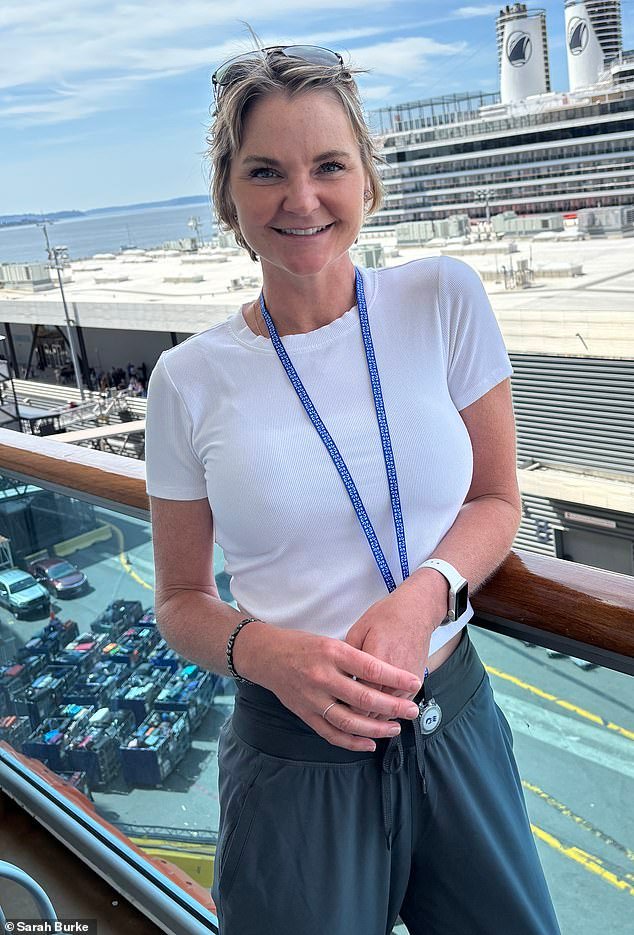
For Sarah Burke, a 50-year-old mother of two from Montana, a breast cancer diagnosis was devastating. But the second blow was the most haunting: her cancer was advanced and had spread to her lymph nodes, despite having received a “clear” routine mammogram just six months prior.
Her story highlights a massive and often misunderstood gap in modern preventative care: dense breast tissue.

Sarah Burke was a picture of health before being diagnosed with cancer

Burke, pictured with husband Jarrin, 45, and children Jackson, 22, and Emily, 18
📉 The Biology of the Blindspot
Around 40% to 50% of women have dense breasts. This has nothing to do with breast size or firmness; it is strictly a radiological term referring to how tissue appears on an X-ray.
-
Fatty Tissue: Appears dark on a mammogram.
-
Fibroglandular Tissue (Dense Tissue): Appears white on a mammogram.
-
Tumors: Also appear white.
When a woman has dense breasts, tumors and healthy tissue blend together on the scan, making it incredibly easy for aggressive cancers to hide in plain sight. Furthermore, women with the highest levels of breast density have up to a six times higher risk of developing breast cancer compared to average.
🏛️ The Policy Gap: Awareness Without Action
For a decade, Sarah experienced callbacks for inconclusive mammograms due to her density, but was never offered a highly sensitive MRI scan.
Her case underscores a systemic tension in U.S. healthcare:
-
The 2024 Mandate: New regulations dictate that all women in the U.S. must now be informed if their mammogram reveals dense breasts.
-
The Coverage Reality: Despite this mandated awareness, the U.S. Preventive Services Task Force states there is “insufficient evidence” to recommend routine MRIs or ultrasounds for dense breasts.
-
The Catch-22: Insurance rarely covers preventative MRIs unless a patient meets a “high-risk” threshold (e.g., strong genetic markers like BRCA). Because Sarah had no family history and lived a healthy lifestyle, her lifetime risk was calculated at just 8%—disqualifying her from the very scan that could have caught her cancer early.

Today, Burke is cancer-free, and she can enjoy time with her family
🏥 A Grueling Treatment Journey
By the time Sarah discovered a rapidly growing lump in 2024, the estrogen-fueled cancer had already escaped into her lymph nodes. Because it was caught late, her treatment had to be incredibly aggressive:
-
Surgery: A mastectomy on the left side and a lumpectomy on the right.
-
Chemotherapy: Including Adriamycin (the “red devil”), which caused a rare and terrifying seizure that temporarily mimicked a brain tumor.
-
Radiation: 18 grueling sessions over the holidays.
-
Surgical Menopause: To cut off the estrogen feeding the cancer, she ultimately opted to have her ovaries and uterus removed.

Chemotherapy left Burke weak and exhausted

