


A vulnerable teenager was left stuck in a busy NHS A&E department for more than 70 days after social services failed to find a suitable placement that could meet her ‘complex’ needs.
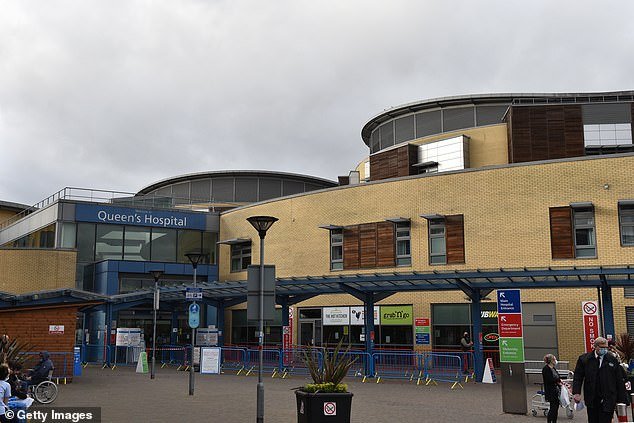
The girl, who has not been named, remained inside Queen’s Hospital in Romford, east London, after her council-arranged care placement broke down and no alternative accommodation could be secured.
Court documents later revealed she was kept under constant supervision in a windowless room within the emergency department for more than two months while authorities attempted to find somewhere for her to be moved to.
A High Court judge described the situation as ‘intolerable’, raising serious concerns about how children with severe behavioural and mental health difficulties are being cared for when placements collapse.
The teenager is understood to have had complex needs, including self-harming behaviour and aggression, which meant she could not be moved to standard paediatric wards or mainstream children’s homes.
In effect, she was deprived of her liberty while remaining in a hospital environment never designed for long-term care.
The case has highlighted growing pressure on the care system, with A&E departments increasingly being used as a ‘place of last resort’ for children with no suitable placement available.
Health chiefs said the situation reflects a wider shortage of specialist children’s homes, secure units and mental health beds, particularly for young people with mental health issues and behavioural problems.

The teenage girl stayed at Queen’s Hospital in Romford, east London (pictured)
Matthew Trainer, chief executive of Barking, Havering and Redbridge University Hospitals Trust, said cases like this are ‘unacceptable and distressing’.
He said: ‘Several young people have experienced long waits for the right support in A&E. It’s unacceptable and distressing for both patients and our staff, and something we’ve been discussing for several years.’
He added that the trust had previously seen another child spend 44 days in A&E after a placement could not be found, describing these as among the longest delays experienced.
Hospital bosses are working with councils and mental health services to try to reduce delays and secure more appropriate placements.
Specialist accommodation for children in crisis is meant to include regulated children’s homes, enhanced foster placements or secure units for those posing risks to themselves or others.
However, chronic shortages in provision mean options are often extremely limited, particularly for teenagers with complex behavioural needs.
A dedicated mental health space for children has been opened at Queen’s Hospital, but it has capacity for just one patient.
Separate NHS data from the North East London Integrated Care Board has warned that emergency departments are increasingly being used when children’s placements break down, particularly where neurodevelopmental or mental health conditions are involved.
Clinicians say prolonged stays in A&E can significantly worsen conditions, as the environment is noisy, overstimulating and lacks the specialist care these children require.
The case comes amid wider concerns about NHS emergency care capacity.
A recent survey by the Royal College of Emergency Medicine found A&E departments are operating at more than double their intended capacity, with thousands of patients forced into corridors, waiting areas and other unsuitable spaces.
On one snapshot day, more than 7,000 patients were being treated in departments designed for fewer than 3,000, while some individuals waited days – or even weeks – for a hospital bed.
Doctors warned that delays are now so severe that some mental health patients have waited more than two weeks for admission.
Experts say that without urgent expansion of specialist children’s services and improvements in hospital discharge capacity, the situation is likely to deteriorate further.
