

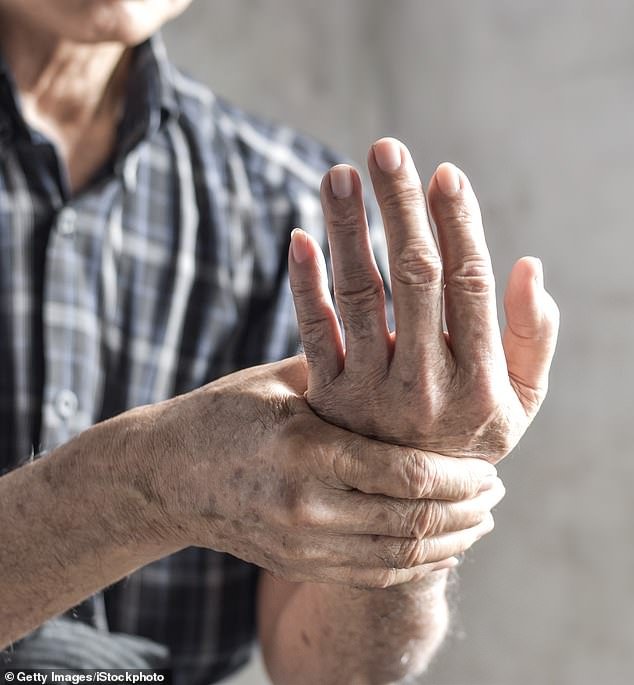
Over the past eight weeks I’ve developed numbness in the fingers of both hands and this prevents me doing many things, such as fastening buttons. However, it’s not painful. Can you recommend any medication, or food to avoid? I’m 91 and otherwise healthy.
Gordon McCready, Eaglesham, Glasgow
It sounds like you might have carpal tunnel syndrome where the median nerve, one of the main nerves to the hand, becomes compressed as it passes through the wrist joint. This can be triggered by inflammation or swelling – often as a result of repetitive use, such as from gardening – causing tingling, numbness or pain.
But even mild osteoarthritis of the wrist joint can trigger it. This is more common in older adults (and, for reasons that aren’t clear, the numbness is not usually accompanied by pain – exactly as you experience).
A far less common cause might be nerve root compression in the neck, although this tends to cause neck pain or stiffness and is rarely on both sides.
Ask your GP if this might be carpal tunnel syndrome. Whilst you wait for an appointment, ask your pharmacy about wrist splints to wear at night – they’ll cost around £15 each. You may well find your symptoms improve within days.
Medication or diet changes are not relevant here.

Carpal tunnel syndrome can be triggered by inflammation or swelling – often as a result of repetitive use, such as from gardening – causing tingling, numbness or pain
My husband is a fit 74-year-old with high cholesterol. He takes medication for high blood pressure and is being pressured into taking statins – but was put off after reading about side-effects. As he enjoys good health, I’m anxious to find a more natural alternative.
Sylvia Shepherd, Wivenhoe, Essex
Your husband’s drug regimen is aimed at lowering his risk factors for heart attack and stroke – high blood pressure (now under control) and raised cholesterol.
A lot of people are anxious about statin side-effects, influenced by misinformation largely from social media. But a major study (the Jupiter study on rosuvastatin) found that the rate of side-effects was the same for those on the drug as for the group taking a placebo. This, for me, says it all. Another option is ezetimibe, which has even fewer side-effects.
There are natural methods for reducing cholesterol: the question is how well your husband can adhere to them.
First, if he needs to, losing weight will lower his cholesterol level. You mention plant stanols in your longer letter – these are cholesterol-like compounds that bind to receptors in the gut and reduce cholesterol absorption.
Research shows 1.5g to 3g daily over four to eight weeks could reduce ‘bad’ LDL cholesterol by 7 to 12 per cent – a modest effect, comparable to about a quarter of the reduction from a statin.
Personally, I’d steer clear of ‘plant stanol’-rich spreads, as these can be highly processed.
He could also boost his intake of soluble fibre, which binds to bile acids (which contain cholesterol that’s then excreted): the liver must remove cholesterol from the blood to make new bile acids. Eating 3g of beta glucans a day (the equivalent of around 90g of oats) over roughly two months can reduce cholesterol levels by as much as 7 per cent.
Nuts can also have a modest effect – partly down to the beneficial unsaturated fats they contain, thought to block the absorption of ‘bad’ cholesterol and help remove it from the body. The key is combining these approaches – in one study, following a diet rich in plant stanols, soluble fibre from oats, plant protein and nuts for around two months, reduced LDL by at least 20 per cent.
It may help to seek the advice of a dietitian to create a suitable programme, and check with his GP before making big changes to his lifestyle, especially as he takes other prescribed medication.
In my view… Meningitis B is not another Covid
The recent outbreak of meningitis B triggered a real wave of anxiety. I’ve had daily conversations with parents panicking about their children – largely, I have to say, unnecessarily so, for what has become clear is that there is much confusion about the transmissibility of viral infections (e.g. Covid-19) and bacterial infections (such as meningitis).
Colds, flu and other common viral illnesses are mostly spread by airborne droplets: the viruses ride on micro droplets from someone’s cough or sneeze. These droplets act as rafts that anyone nearby will breathe in, so contracting the infection.
Bacterial infections do not behave like this: bacteria are much larger than viruses, and are spread by transfer of body fluid – sharing drinks, vapes, cutlery, kissing, or even via a small degree of facial contact.
Given this outbreak was in Kent, the chances of a student in St Andrew’s, say, being infected by the same pathogen are slim – there’s no reason to suppose that it can rampage like Covid-19.
Nonetheless, once vaccine supplies are back to normal, parents may be well-advised to get their child vaccinated against MenB from around the age of 15.
Write to Dr Scurr at Good Health, Daily Mail, 9 Derry Street, London, W8 5HY or email drmartin@dailymail.co.uk – include your contact details. Replies should be taken in a general context. Always consult your own GP with any health worries.
