


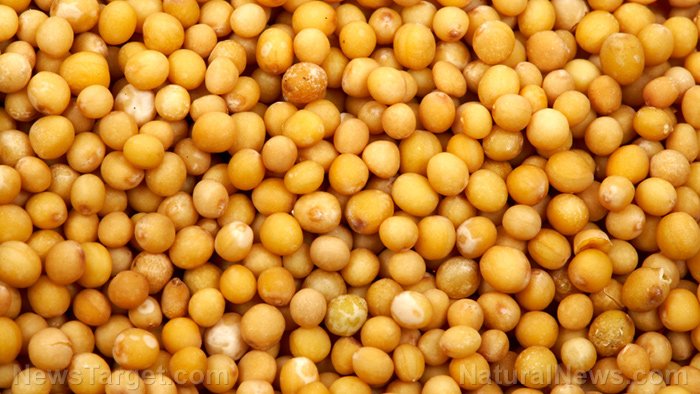

These days, mustard is viewed as the perfect partner to ketchup. But way back when, this pungent plant was valued for more than just its culinary applications. Ancient peoples regarded mustard as a highly important botanical medicine.
Mustard in ancient Greece
According to the American Botanical Council, some of the earliest recorded uses of mustard as medicine can be found in the De Materia Medica. This book, penned by the Greek physician, Pedanius Dioscorides, is a five-volume work that covers 600 plants and 1000 remedies made from them. Dioscorides wrote of many uses for the different species of mustard. One of these was a kind of oil made from ground mustard seed (which he called a “sinapelaion”). This, he noted, was supposed to good a cure for “diseases of long duration, drawing out faulty fluids from far within.”
Hedge mustard had several passages dedicated to it and for good reason. Dioscorides listed off a wide array of functions, ranging from healing wounds to easing headaches to relieving the pain of the eyes. In fact, Dioscorides had nothing but good things to say about mustard. He even likened the potency of mustard seeds to garlic and onions, stating that “the qualities of those things so similar in nature should not be separated.”
Mustard in ancient India
Meanwhile, in India, mentions of mustard as medicine are scattered across various Ayurvedic texts. In fact, the numerous varieties of mustard go by so many different names in these texts that identifying them all is very challenging. Adding to the confusion is the practice of referring to mustard seeds by their colors, meaning that the same species of mustard could go under a different name based on the color of its seed.
Mother Nature’s micronutrient secret: Organic Broccoli Sprout Capsules now available, delivering 280mg of high-density nutrition, including the extraordinary “sulforaphane” and “glucosinolate” nutrients found only in cruciferous healing foods. Every lot laboratory tested. See availability here.
But just as mustard has many names, it has even more uses. The medicinal applications of mustard focused mainly on the seeds and oil, with the leaves being a rarity. In particular, mustard seed was commonly utilized as a paste, fumigant, diaphoretic, massage powder, poultice, and a kind of mouthwash. (Related: Surprise! Why common mustard is one of the healthiest cancer-fighting foods you’ll ever discover.)
“The applications are seen indicated in diseases like leucoderma, cracked skin, fever, leprosy, wasting, insanity, epilepsy, swelling, rheumatoid arthritis, neurological disorders, gynecological disorders, breast milk disorders, earache, wounds, acne vulgaris, eruptions in oral cavity and retention of placenta,” wrote the authors of a study dedicated to compiling mustard’s uses in Ayurveda.
The texts further indicate that, when taken internally, mustard seed helps the body expel toxins. “Mustard seed is an ingredient of formulations that induce emesis, cleanse the cranial cavity and for giving decoction enema,” said the authors, which they believe means that mustard seeds were also used to treat rhinitis, vomiting, flatulence, and even insanity.
Unani medicine, the system of medicine practiced in Mughal India and modern Central Asia, has a use for mustard seed as well. Specifically, it has been and continues to serve as a treatment for pneumonia, gout, sciatica, epilepsy, and neuralgia.
Mustard around the world
Far from being the only countries to have a history with mustard as medicine, other nations have used this plant in one way or another. In Africa, mustard roots are taken by breastfeeding women to encourage milk production. Mustard leaves have been purposed into both internal treatments (for syphilis, and impotence) and topical creams (for headaches) in Java, Indonesia.
Even the native people of North America have turned to mustard to cure their ills and aches. The Cherokee, for instance, valued mustard as an appetite stimulant, kidney healer, and malaria cure. People from the Shinnecock Indian Nation used mustard in the same way as the Cherokee, in addition to taking it to induce vomiting. On the other hand, the Meskwaki believed that the pungent smell of mustard made it ideal for colds.
Learn more about the other ancient applications of our most beloved foods by going to Artifacts today.
Sources include:
CMS.Herbalgram.org
NISCAIR.RES.in
