

Improving mobility in the arms and hands of stroke survivors may be possible through electrical stimulation of the spinal cord, research suggests.
Around 100,000 Britons suffer a stroke each year and the condition – which occurs when blood stops flowing to part of the brain – is one of the nation’s leading causes of death, claiming around 34,000 lives annually.
An estimated 1.4 million stroke survivors are living in the UK, many of whom face long-term disabilities including muscle weakness, impaired movement and – in most cases – difficulty using their arms, hands or feet.
But a new study, published in the journal Nature Medicine, may provide fresh hope.
Using a technique known as cervical epidural spinal cord stimulation – which helps the brain communicate with weakened muscles – researchers at the University of Pittsburgh found significant improvements in arm strength and mobility among seven stroke survivors.
The findings raise the prospect of a new treatment for people struggling to use their upper limbs.
Marco Capogrosso, assistant professor of neurological surgery at the University of Pittsburgh, and the study’s co-senior author, said the approach may ‘rapidly help people move their arms better, even years after a stroke’.
He added: ‘The stimulation works mostly as an assistive technology – when it’s on, people can move better. By stimulating the spinal cord, we can immediately allow residual connections between the brain and the spinal cord to work more efficiently, enabling better movement.’

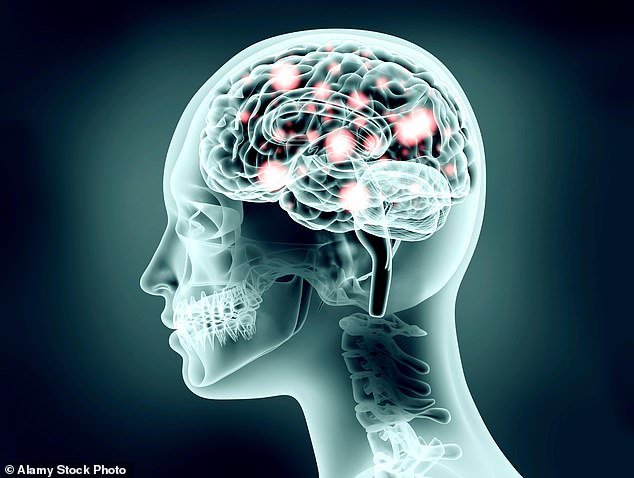
Improving arm and hand mobility for stroke survivors may be possible through electrical stimulation of the spinal cord, research suggests
The technique, conducted in a trial period of four weeks with participants who had an average age of 50, was found to bring a range of improvements to muscle strength.
With the stimulation switched on, shoulder flexion – the movement involved in raising the arm – improved by 28 per cent on average. Elbow extension improved by 35 per cent, while grip strength increased by 55 per cent.
Overall, participants experienced an average 32 per cent increase in arm strength while the stimulation was active.
The device used in the study has been employed for decades to treat chronic pain, but this is the first time it has been tested as a way of restoring arm function in stroke survivors.
Researchers found that all participants experienced immediate improvements in strength when the stimulation was on, regardless of the severity of their impairment.
Furthermore, spasticity – a condition in which there is an abnormal increase in muscle tone or stiffness – was also reduced among all participants.
George Wittenberg, professor of neurology and physical medicine and rehabilitation at University of Pittsburgh, said: ‘From a clinical perspective, even modest improvements in arm strength or control can make a meaningful difference in daily life of stroke survivors.
‘Some of the improvements we measure may look small from the outside, but many stroke survivors are just on the verge of being able to do something important. Even a small change in motor function can be very significant if it helps someone button a shirt, open their hand or return to an activity they care about.’
Despite the encouraging results, researchers found that motor function declined when the stimulation was discontinued. This suggests the technology currently works primarily as an assistive device when active rather than a permanent cure.
However, the team say the findings warrant larger clinical trials. They have already begun recruiting participants for a longer study to further assess the effects of spinal cord stimulation on its own and in combination with physical therapy.
Professor Capogrosso added: ‘This study represents the conclusion of our initial feasibility phase and an important step toward real-world clinical application.
‘Our goal is to develop a technology that could eventually be used in everyday life, not just in the clinic.
‘These results give us confidence that spinal cord stimulation could become a practical, implantable option for helping stroke survivors use their arms when it matters most.’
